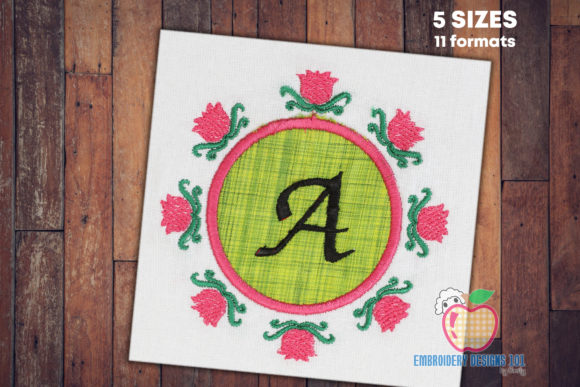
Frame with Flowers Applique
A Designer’s First Look: Delicate, Purposeful, and Quietly Versatile
When I opened Frame with Flowers Applique for the first time, I didn’t see just another border design—I saw a quiet invitation. The shape is soft-edged but intentional: a gentle rectangular frame, not rigid or ornate, with botanical motifs blooming along two opposing sides. No filler florals crammed into corners—just balanced, breathing space. It feels like a designer who understood restraint. That matters, especially if you’re stitching this onto a custom embroidered tote bag for a local boutique or personalizing a linen pillow cover for a wedding gift. This isn’t a shout—it’s a thoughtful accent.
Where It Lives Best (and Why)
I tested Frame with Flowers Applique across three real projects: a medium-weight cotton apron for a food blogger’s merch line, a lightweight organic cotton baby blanket edge, and a structured twill cap for a small-batch apparel brand. In each case, the design held its personality without overwhelming the item. On the apron? It framed the lower hem beautifully—elegant but grounded, not fussy. On the baby blanket? The open layout kept it from feeling too dense or heavy, which is crucial for delicate skin and frequent washing. And on the cap? Yes—it worked, but only because I used a smaller hoop size and adjusted stabilizer layers carefully (more on that below).
This embroidery file shines where intention meets simplicity: tote bag designs, sweatshirt embroidery near the cuff or hem, tea towel borders, nursery decor pillows, and even as a subtle embroidered patch sewn onto denim jackets. Its strength lies in how it supports—not competes with—the product it’s on. For Etsy sellers and craft business owners, that means higher perceived value without extra labor. Customers notice when something feels *designed*, not just decorated.
Fabric & Fit: Where Attention Matters
Frame with Flowers Applique performs reliably on stable, medium-weight fabrics—cotton canvas, linen blends, midweight knits with proper backing. But here’s where your judgment kicks in:
- Thin or sheer fabric? Avoid using it raw—you’ll need tear-away + cutaway stabilizer combo to prevent show-through or puckering in the open areas.
- Stretchy fabric? Pre-stabilize aggressively. The satin stitch elements along the floral stems need firm support, or they’ll distort under tension.
- Dark fabric? Test thread colors thoroughly. Some light-toned floral details can disappear without contrast—especially in fill stitch zones. A quick black-and-white mockup saves hours later.
- Curved surfaces (caps, sleeves)? The frame’s straight edges mean it adapts well—but avoid placing it over deep seams or high-curve zones unless you’ve tested hoop placement and digitization flow.
- Small hoop sizes? It scales down cleanly, but inspect the smallest flower centers before stitching. Tiny details may vanish below 3.5 inches wide—check your machine’s minimum recommended size.
What It Adds Beyond Stitching
This isn’t just about execution—it’s about impression. When customers hold a handmade product with Frame with Flowers Applique stitched thoughtfully at the edge of a kitchen towel or baby onesie, they feel care. Not just “handmade,” but *considered*. That builds trust—especially for Etsy sellers and small shop owners pricing premium items. The design’s clean separation of color steps also makes it easier to manage thread changes and maintain consistency across batch production. And because it’s an applique design, you can mix fabric textures into the flowers themselves—adding tactile depth no single-thread motif can match.
For digital product sellers, this machine embroidery design works well in printable mockups. Its balanced negative space renders clearly in flat lay photos, and it reads well at thumbnail size—important for listings where shoppers scroll fast.
Practical Designer Notes Before You Stitch
Before committing to your first run, do these six things:
- Test on scrap fabric—same type and weight as your final project, with identical stabilizer layers.
- Review stitch density in the floral centers and frame corners. High density in tight spaces can cause stiffness or thread breakage on lightweight items.
- Confirm hoop size compatibility. If you’re using a compact machine, verify the largest version fits without re-hooping mid-design.
- Inspect small details at 200% zoom in your embroidery software—especially petal tips and stem joins. Are they smooth? Or jagged from oversimplification?
- Try black-and-white and grayscale mockups to assess visual hierarchy. Does the frame still read clearly without color cues?
- Check licensing—if you plan to sell finished products or resell the digital embroidery file, confirm commercial use rights are included. Don’t assume.
Final Thought: A Border That Bridges
Frame with Flowers Applique doesn’t try to be everything. It’s not a statement monogram, nor a dense all-over pattern. It’s a bridge—a way to elevate a simple item with quiet confidence. For craft business owners building recognizable style, for apparel decorators adding signature touches to custom apparel, and for makers who believe finishing details build loyalty—it’s a reliable, repeatable tool. Use it where attention lingers: the edge of a gift-wrapped pillow, the cuff of a child’s sweater, the hem of a market tote. Done right, it won’t just finish the piece—it’ll make people pause, smile, and remember who made it.