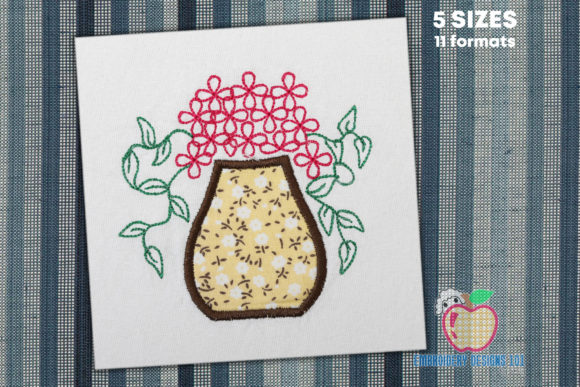
Spring Flowers in Pot Applique
A Designer’s First Look: Fresh, Friendly, and Ready for Real Projects
When I opened Spring Flowers in Pot Applique for the first time, my eye went straight to the balance—how the pot anchors the composition while the blossoms lift upward with gentle asymmetry. It’s not fussy or overly botanical; it’s approachable springtime. The shape reads clearly at small sizes, and the layout leaves breathing room around the edges—critical when you’re stitching on curved surfaces like tote bag handles or baby onesies. As a designer who ships embroidered kitchen towels to Etsy buyers and embroiders custom sweatshirts for local boutiques, I need designs that translate well from screen to stitch *and* from stitch to shelf. This one does.
Where It Shines: From Tote Bags to Nursery Decor
I recently tested Spring Flowers in Pot Applique on a medium-weight cotton canvas tote—exactly the kind small shop owners use for farmers’ market merch. At 6 inches wide (in the 6x10 hoop), the design held crisp satin-stitched petals and clean fill-stitched leaves without bleeding or puckering. The pot’s base stayed stable, even with light stabilizer. That same file worked beautifully on a soft cotton-blend baby blanket—no skipped stitches, no thread nesting—because the stitch density avoids overloading delicate fabric. For holiday embroidery or personalized gifts, it reads instantly as “spring,” but not seasonally locked: pair it with neutral thread on an ivory tea towel, and it becomes timeless. As an embroidery file, it fits naturally into collections of Bouquets for craft business owners building themed digital product bundles.
What to Watch For: Texture, Fabric, and Fit
This is not a design to push into tight corners or ultra-thin fabrics without testing. On lightweight rayon or stretchy jersey, I recommend basting + tear-away + cutaway combo stabilizer—especially around the pot’s rim, where satin stitch meets curve. On dark fabric, check contrast early: pale yellow or mint thread may vanish unless you add a subtle underlay or adjust top thread weight. And if you’re stitching on caps or curved hats? Stick to the 4-inch or 5-inch size. Anything larger risks distortion near the bill seam. The applique design includes clear placement zones, but the tiny stamen details in the center bloom can blur on low-thread-count fabrics—so inspect those in your test run.
Real-World Use Cases That Just Work
- Custom apparel: Looks polished on crewneck sweatshirts—centered above the left chest or scaled down for sleeve accents.
- Embroidered patch: Clean outer edge makes it ideal for iron-on or sew-on patches on denim jackets or aprons.
- Baby embroidery: Soft curves and rounded shapes read as gentle and safe—perfect for onesies, burp cloths, or crib mobiles.
- Etsy seller asset: Works across multiple hoop sizes, so you can list one digital embroidery file with five usable versions—great for scalable product listings.
- Printable mockup: Its balanced proportions hold up in flat-lay photos and lifestyle shots—no awkward cropping needed.
Design Integrity Meets Customer Trust
Customers notice when a handmade product feels intentional—not just stitched, but *designed*. With Spring Flowers in Pot Applique, the visual rhythm (pot weight → stem rise → flower burst) builds quiet confidence in your craftsmanship. It doesn’t shout—it invites. That matters whether you’re selling a $38 embroidered pillow cover on your small shop site or gifting a custom tea towel to a new mom. Buyers associate clarity and cohesion with professionalism. And because the design avoids dense fill areas or micro-detailing, it stitches reliably across machines—from mid-range Brother models to high-end Janomes—reducing post-sale support questions for digital embroidery file sellers.
Practical Designer Notes Before You Stitch
- Always test Spring Flowers in Pot Applique on scrap fabric matching your final project’s weight and stretch.
- Compare thread colors on both light and dark backgrounds—especially for the pot’s rim and leaf veins.
- Confirm your hoop size matches the version you select: 4x4, 5x7, 6x10, 8x8, or 8x12—no resizing mid-project.
- Zoom in on small details in your embroidery software: check for stray running stitches or clipped corners before hooping.
- Run a black-and-white mockup first—this reveals value contrast and silhouette strength better than color previews.
- Use appropriate stabilizer: light cutaway for knits, tear-away for stable wovens, and optional topping for napped fabrics like terry cloth.
- If selling finished products, verify licensing terms—some machine embroidery designs restrict commercial use unless upgraded.
Final Thought: A Quietly Versatile Staple
Spring Flowers in Pot Applique won’t dominate your portfolio—but it will earn repeat orders. It’s the kind of embroidery design that disappears into the product while elevating it: a cheerful detail on a linen apron, a tender accent on a baby cap, a refined touch on a boutique-branded kitchen towel. It respects the fabric. It respects the machine. And it respects the maker’s time. For Etsy sellers curating seasonal Embroidery bundles, for craft fair vendors stitching personalized gifts, and for designers building trustworthy design assets—this is one of those quiet keepers. Not flashy. Not fragile. Just right.