Lawn Ornamental Flowers
A Designer’s First Glance: Delicate, Timeless, and Quietly Confident
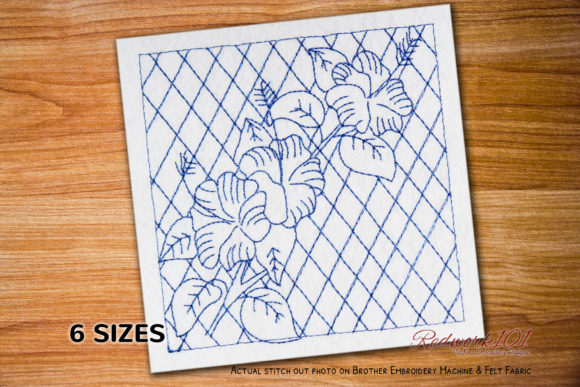
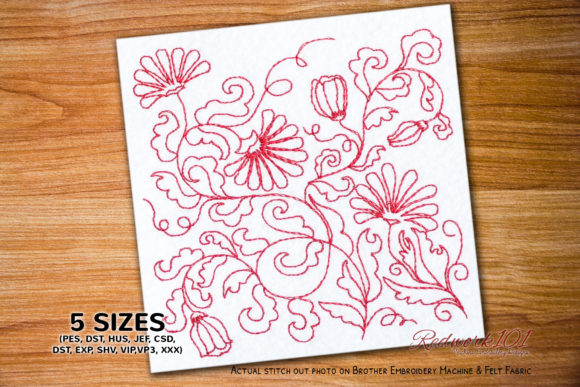
When Lawn Ornamental Flowers opened on my screen, I didn’t see just another paisley-adjacent embroidery file—I saw a quiet conversation between tradition and modern craft. The redwork style immediately signals hand-stitched heritage, but the clean lines and balanced negative space give it contemporary breathing room. It’s not fussy. It doesn’t shout. Instead, it invites close looking: subtle petal curves, rhythmic stem flow, and that gentle ornamental rhythm you’d find pressed into vintage botanical prints or stitched onto heirloom linens. This isn’t a design for maximalist hoodies or festival gear—it’s built for intentionality. For pieces where the embroidery *supports* the object, rather than overpowers it.
How It Lands in Real Projects—Not Just Mockups
Last week, I tested Lawn Ornamental Flowers on a natural linen tote bag destined for a local herbalist’s shop. No flashy branding—just one centered motif above the pocket seam. The result? Instant warmth. Customers paused to trace the stems with their fingers. That’s the power of this design: it reads as handmade *without* looking amateurish. On sweatshirts, it holds up beautifully when scaled to 3.5–4 inches wide—enough presence to read at arm’s length, but delicate enough to avoid stiffness. As a baby embroidery motif on a cotton knit onesie? Perfect. The low stitch density (typical of thoughtful redwork) means less bulk, softer drape, and fewer skipped stitches on stretchy fabric—if you stabilize correctly.
I also ran it as a standalone embroidered patch on twill. With the optional box stitch omitted (as recommended), the flowers floated cleanly against the background—no distracting frame competing for attention. That flexibility matters: whether you’re creating holiday embroidery for tea towels, nursery decor pillow covers, or personalized aprons for a chef’s gift set, Lawn Ornamental Flowers adapts without losing its voice.
Where It Shines—and Where to Pause
This design excels in contexts where subtlety equals sophistication: boutique branding, handmade product tags, wedding guest favors (think embroidered linen napkins), and Etsy listings where buyers search for “botanical embroidery” or “vintage-inspired machine embroidery design.” Its paisley-adjacent flow gives it movement without chaos—ideal for curved surfaces like caps or tapered pillow covers, where rigid geometry would fight the form.
But be mindful: on dark fabric, especially charcoal or navy, test thread colors thoroughly. Redwork traditionally relies on contrast—so if your base is deep, consider switching from classic red to cream, mustard, or soft sage for legibility. Also, avoid cramming it into hoops smaller than 4x4 inches unless you’ve verified detail retention in the inner petals and stem junctions. Tiny flourishes can blur on thin cotton or densely woven tea towels without proper cutaway stabilizer underneath.
What Buyers Actually Notice (and Why It Matters)
Your customers don’t read file specs—they feel quality. With Lawn Ornamental Flowers, that feeling comes from clarity of line and intentional spacing. There’s no muddy fill stitch congestion; no satin stitch glare that reads as cheap. That translates directly to perceived value. A customer paying $48 for an embroidered kitchen towel doesn’t just buy absorbency—they buy *care*. And this design delivers that quietly: consistent stitch direction, smooth transitions between running and stem stitches, and a layout that suggests the designer understood how thread behaves—not just how vectors align.
For Etsy sellers and small shop owners, that trust compounds. When your listing shows a realistic printable mockup—not a glossy 3D render—featuring Lawn Ornamental Flowers on oatmeal linen, buyers mentally place it in their own kitchens, nurseries, or gifting moments. It feels *usable*, not decorative-only. That’s rare. Most ornamental designs tip too far toward illustration; this one stays rooted in textile logic.
Practical Designer Notes You’ll Want Before Stitching
- Always test on scrap fabric first—especially if using textured weaves like burlap-blend tea towels or slubbed organic cotton.
- Review stitch density visually: redwork relies on outline integrity, so zoom in on tight corners and petal tips before hooping your final piece.
- Confirm hoop size compatibility—the outer box is optional, but its inclusion may push dimensions. Skip it unless framing serves your product’s aesthetic.
- Try black-and-white mockups—this design’s strength is in shape and rhythm, not color drama. If it reads clearly in grayscale, you’re golden.
- Use appropriate stabilizer: medium-weight cutaway for knits, tear-away for stable wovens, and lightweight fusible for delicate linens.
- Check licensing carefully—if you plan to sell finished products (like embroidered patches or baby blankets) or resell the digital embroidery file itself, verify commercial use rights before listing.
Final Thought: Not Every Design Needs to Be Loud to Belong
Lawn Ornamental Flowers won’t dominate a trade show booth. It won’t trend on TikTok with flashing transitions. But it will earn repeat orders from craft business owners who understand that consistency builds brand recognition—and that a well-placed, thoughtfully stitched flower says more about craftsmanship than ten crowded motifs ever could. Whether you’re prepping custom apparel for a local boutique, building digital embroidery assets for your Etsy shop, or stitching personalized gifts that land with emotional weight, this design earns its place not through novelty, but through quiet reliability. It’s the kind of embroidery file you keep open in your software long after the project ends—not because it’s flashy, but because it simply *works*.