Floral Cute Lion: A Designer’s Real-World Embroidery Review
First Impressions: Playful, Polished, and Purposefully Balanced
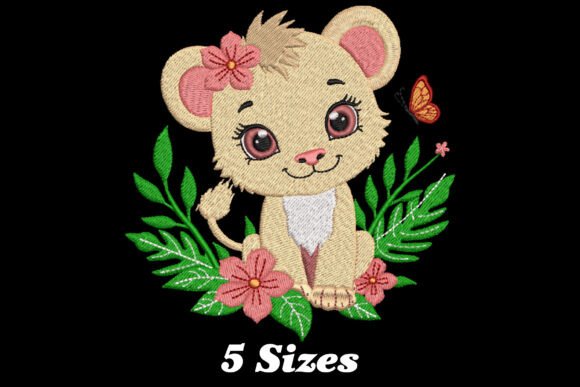
When I opened Floral Cute Lion for the first time, I didn’t just see a wild animal motif—I saw a thoughtful design decision. It’s not a roaring jungle king or a hyper-realistic feline portrait. Instead, it’s a soft, stylized lion with floral accents woven into its mane and outline—petals curling like gentle brushstrokes, eyes round and friendly, posture relaxed but confident. The shape reads clearly at a glance, even at small scales, and the balance between organic curves and intentional negative space tells me this was drafted with real fabric in mind—not just screen appeal. It lands somewhere between nursery charm and boutique-ready sophistication, making it unusually versatile across age groups and product types.
A Tote Bag Test: Where Personality Meets Practicality
Last week, I stitched Floral Cute Lion onto a natural canvas tote for a local mom-owned café’s weekend pop-up. We used medium-weight cotton twill, tear-away stabilizer, and matte poly thread in warm terracotta and sage. The result? Instant recognition—customers paused mid-aisle to smile, point, and ask where it came from. That reaction matters. Floral Cute Lion doesn’t shout; it invites. Its visual personality works because it’s detailed enough to feel handmade, but not so dense that it overwhelms the fabric or adds bulk. On that tote, the satin-stitched mane held crispness without stiffness, and the floral fill stitches stayed airy—not muddy—even after two rounds of light washing and daily use.
Where It Shines (and Where It Asks for Thought)
Floral Cute Lion performs exceptionally well on:
- Custom apparel: Sweatshirts and crewneck tees—especially lighter colors—let the design breathe. The rounded silhouette avoids awkward distortion over shoulders or seams.
- Baby embroidery: Its gentle expression and lack of sharp angles make it ideal for onesies, burp cloths, and crib mobiles. Just avoid ultra-fine thread on delicate fabrics—stick with 40-weight for clarity and durability.
- Towels and tea towels: The open layout prevents water absorption issues common with overly dense machine embroidery designs. Stitches sit cleanly above loops without snagging.
- Embroidered patches: With clean outer edges and moderate stitch density, it digitizes beautifully for iron-on or sew-on patch applications—no fraying corners or floating threads.
- Holiday and personalized gifts: Pair it with subtle seasonal accents (a tiny wreath crown, a ribbon bow) in your layout software—it adapts without losing identity.
But it does require intention in certain contexts:
- Stretchy fabric: Use cut-away stabilizer underneath and reduce top tension slightly—those floral curves can pucker if the base shifts during stitching.
- Dark or textured fabrics: Test thread color contrast first. Light pastels may disappear on charcoal linen; try heathered grays or oatmeals instead of pure black.
- Caps and curved surfaces: Avoid placing it near the bill seam unless you’ve confirmed hoop compatibility. The design’s width fits comfortably in standard 4×4 hoops—but verify before hooping expensive blanks.
- Frequent-wash items: Reinforce with a lightweight fusible backing if using on baby blankets or kitchen linens. Not required—but recommended for longevity.
What It Adds Beyond Stitching: Trust, Tone, and Tangible Value
As a designer who sells digital embroidery files and consults for Etsy sellers, I pay attention to how a design affects perceived value—and Floral Cute Lion elevates it. Customers don’t just buy a lion; they buy warmth, care, and quiet confidence. That translates directly to higher conversion on listings labeled “hand-embroidered,” “small-batch,” or “designed with intention.” For craft business owners, it supports brand consistency without demanding rigid uniformity—you can pair it with handwritten fonts, earthy palettes, or minimalist layouts and still feel cohesive.
It also builds trust. Unlike overly complex wild animals embroidery files that risk misalignment or thread breaks, Floral Cute Lion feels stable in execution. Fewer jump stitches, logical color stops, and consistent fill direction mean fewer restarts—and more reliable finished product turnarounds. That reliability matters when you’re fulfilling holiday orders or prepping for a craft fair.
Designer Notes You’ll Actually Use
Before stitching Floral Cute Lion into your next project, do these five things:
- Test on scrap fabric—same type and weight as your final piece. Watch how the floral elements settle on textured weaves.
- Check thread color contrast in both natural and artificial light. A color that pops on-screen may mute on oatmeal linen.
- Review stitch density visually—not just numerically. Look for tight clusters around the lion’s eye or inner petals; adjust underlay if needed.
- Confirm hoop size and placement. Does it fit comfortably within your machine’s max area? Will it clear zippers, seams, or pockets?
- Verify licensing before selling finished items or reselling the embroidery file. Since it’s listed as a machine embroidery design for t-shirts, towels, and home decor, commercial use appears supported—but always double-check the source terms.
Final Thought: Not Just Another Animal Motif
Floral Cute Lion stands out because it doesn’t chase trends—it fulfills needs. It’s gentle enough for baby embroidery, bold enough for boutique sweatshirt embroidery, and distinctive enough to anchor a small shop product line. It’s the kind of embroidery file you keep in your “go-to folder” not because it’s flashy, but because it consistently delivers clarity, charm, and craftsmanship—on fabric, on mockups, and in customers’ hands. Whether you’re designing a personalized gift, building an Etsy collection, or refreshing your craft business’s signature look, this one earns its place.